
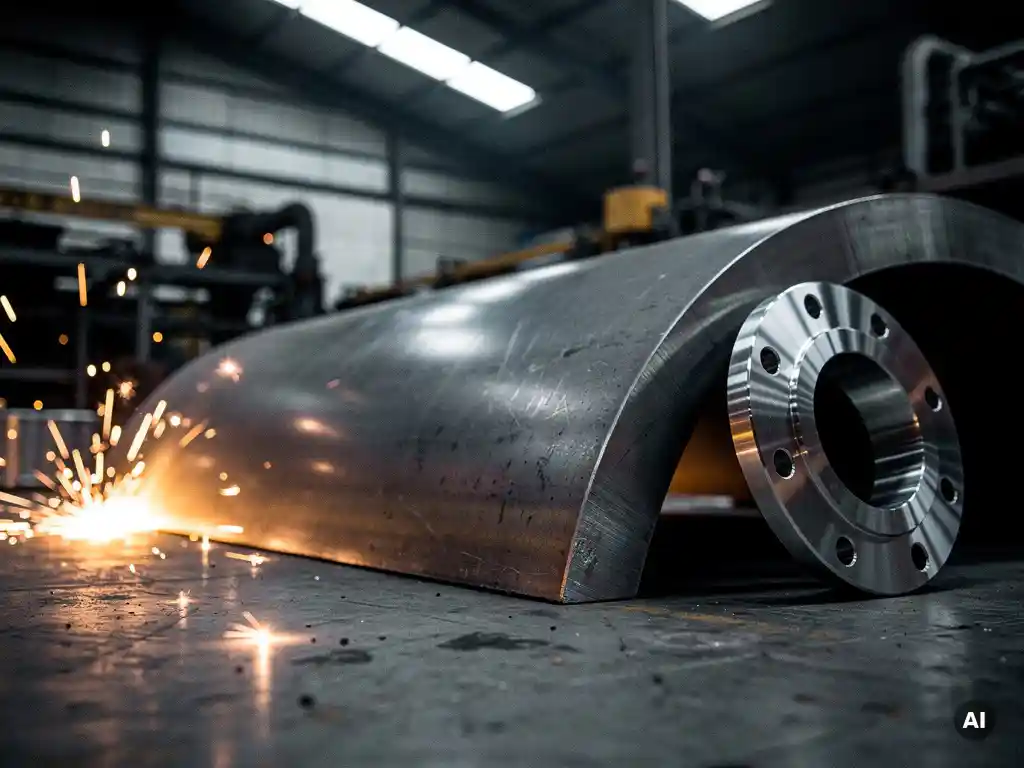
Pressure vessels are manufactured from a wide range of materials, with carbon steel being the most common choice for general industrial applications. The right material depends on operating pressure, temperature, the chemical nature of the process fluid, and the required service life. This article works through the key questions engineers and procurement teams face when specifying pressure vessel construction materials.
Which material is most commonly used in pressure vessel construction?
Carbon steel is by far the most widely used material in pressure vessel construction. It offers a well-understood combination of mechanical strength, weldability, and cost-effectiveness for applications where the process fluid is not aggressively corrosive and operating temperatures remain within manageable limits. The majority of pressure vessels in refining, petrochemical, and general process industries are built from carbon steel grades.
Common carbon steel grades used in pressure vessel fabrication include SA-516 Grade 70, which is widely specified for moderate-temperature service, and SA-387 grades for elevated-temperature applications. Low-alloy steels, which incorporate small additions of chromium, molybdenum, or vanadium, extend the performance envelope further, offering improved resistance to hydrogen attack, creep, and elevated temperatures.
Stainless steel is the next step up when corrosion resistance becomes a primary concern. Austenitic grades such as 316L and 304L are frequently used in chemical processing, food production, and pharmaceutical applications. However, stainless steel is significantly more expensive than carbon steel, and for large vessels the cost difference becomes substantial. This is one reason clad construction is often preferred for large-diameter equipment.
What are exotic or high-performance alloys used in pressure vessels?
Exotic or high-performance alloys are specialist pressure vessel materials selected when standard carbon or stainless steels cannot withstand the operating environment. These alloys are used in applications involving highly aggressive chemicals, extreme temperatures, or both simultaneously. Common examples include nickel-based alloys such as Hastelloy and Inconel, as well as reactive metals including titanium, zirconium, and tantalum.
Each alloy addresses a specific combination of challenges:
- Hastelloy C-276 and C-22 offer outstanding resistance to a broad range of aggressive acids, oxidising and reducing environments, and pitting corrosion.
- Inconel alloys combine high-temperature strength with oxidation and corrosion resistance, making them suitable for high-pressure, high-temperature reactor environments.
- Titanium provides excellent resistance to chloride-containing media and seawater, at a lower density than steel, making it valuable in offshore and chemical processing applications.
- Zirconium performs exceptionally in concentrated sulfuric and hydrochloric acid environments where most other metals fail.
- Tantalum offers near-universal corrosion resistance and is used in the most aggressive chemical service conditions, though its high cost limits it to applications where no alternative exists.
Fabricating with these materials requires specialist knowledge. Welding procedures, heat treatment requirements, and contamination controls differ significantly from standard steel fabrication. Titanium and zirconium, for example, must be welded under inert gas shielding to prevent embrittlement. This is why the choice of fabricator matters as much as the choice of material when specifying exotic alloy pressure vessels.
What is clad construction and when is it used in pressure vessels?
Clad construction combines a structural base material, typically carbon or low-alloy steel, with a thin corrosion-resistant inner layer bonded to its surface. The base material provides the mechanical strength and carries the pressure loads, while the cladding provides the corrosion protection. This approach delivers the performance of a corrosion-resistant alloy at a fraction of the cost of a solid exotic alloy vessel.
Clad vessels are used when the process fluid is corrosive enough to attack carbon steel, but a solid stainless steel or exotic alloy construction would be prohibitively expensive, particularly for large equipment. Common cladding materials include stainless steel, Inconel, Hastelloy, titanium, and zirconium. The cladding is typically applied by roll bonding, explosion bonding, or weld overlay, depending on the material combination and the geometry of the vessel.
For very large vessels, clad construction is often the only economically viable route to achieving corrosion resistance. A vessel of several metres in diameter and hundreds of tons in weight, built entirely from solid Hastelloy or titanium, would be extraordinarily costly. Clad construction makes such projects feasible without compromising on the required corrosion performance.
How does operating environment determine pressure vessel material selection?
The operating environment is the primary driver of pressure vessel material selection. Four factors define the envelope within which a material must perform: operating pressure, operating temperature, the chemical composition of the process fluid, and the expected service life. No single material is optimal across all combinations, so selection always involves matching material properties to the specific conditions of the application.
Temperature has a direct impact on material strength. Carbon steel loses strength progressively at elevated temperatures and becomes brittle at very low temperatures. Cryogenic applications require materials such as 9% nickel steel or austenitic stainless steel, which retain adequate toughness below minus 100 degrees Celsius. High-temperature service above 400 to 500 degrees Celsius typically requires low-alloy or high-alloy steels with proven creep resistance.
The chemical environment determines whether a material will corrode, pit, stress-corrode, or suffer hydrogen-induced damage over time. Chloride-containing process fluids, for example, can cause stress corrosion cracking in standard austenitic stainless steels, pushing the specification toward duplex stainless steels, titanium, or nickel alloys. Hydrogen-rich environments at elevated pressure and temperature require specific low-alloy steels assessed against the Nelson curves to avoid hydrogen attack.
Cyclic loading, thermal cycling, and the consequences of equipment failure also influence material choice. In critical applications where failure would have serious safety or operational consequences, material selection is conservative and well documented, with full traceability from mill certificate to finished vessel.
What material challenges arise when fabricating large or thick-walled pressure vessels?
Large and thick-walled pressure vessels introduce fabrication challenges that do not arise in standard equipment. As wall thickness increases, the mechanical and metallurgical demands on the material and the fabrication process grow significantly. These challenges affect material procurement, forming, welding, and post-weld heat treatment.
Thick steel plate requires careful attention to through-thickness properties. Lamellar tearing, a form of subsurface cracking caused by welding stresses acting on inclusions in the through-thickness direction, becomes a real risk in heavy plate. Material specifications for thick-walled vessels often require ultrasonic testing of plate and additional restrictions on sulfur content to reduce this risk.
Welding thick sections requires multi-pass procedures with controlled interpass temperatures. Post-weld heat treatment, used to relieve residual stresses and restore toughness in the heat-affected zone, becomes more complex as section thickness increases. For very large vessels, the heat treatment of complete assemblies may require purpose-built furnaces or localised heating procedures.
Exotic alloys add further complexity. The weld procedures, filler materials, and shielding requirements for titanium, zirconium, or nickel alloys are fundamentally different from those for carbon steel. When these materials are used in thick-walled or large-diameter configurations, the fabricator must combine exotic alloy expertise with the infrastructure and process control needed for heavy fabrication. This combination of capabilities is not common in the market.
Which standards govern material requirements for pressure vessels?
Pressure vessel material requirements are governed by internationally recognised codes and standards that define which materials are approved for use, how they must be tested, and what documentation is required. The applicable standard depends on the geographic market, the end user’s requirements, and the nature of the application.
The most widely referenced standards in international pressure vessel fabrication are:
- ASME Boiler and Pressure Vessel Code (BPVC), Section VIII: The dominant standard in North American markets and widely accepted internationally. It defines approved material specifications, design rules, and inspection requirements. Materials are specified using ASME SA designations, which correspond closely to ASTM standards.
- EN 13445 (Unfired Pressure Vessels): The European standard applicable under the Pressure Equipment Directive (PED). It references European material standards and applies to vessels placed on the market within the European Economic Area.
- PED (Pressure Equipment Directive 2014/68/EU): The European regulatory framework that governs the design, manufacture, and conformity assessment of pressure equipment. Compliance is mandatory for equipment placed on the EU market above defined pressure-volume thresholds.
Both ASME and EN 13445 specify approved material grades, required mechanical property testing, impact testing requirements at low temperatures, and traceability obligations. Materials not listed in the applicable code require additional qualification before they can be used in a code-compliant vessel. For exotic alloys, this qualification process adds to the engineering work required at the front end of a project.
How Coek approaches pressure vessel material selection and fabrication
Coek Engineering manufactures custom pressure vessels for applications where material selection, fabrication complexity, and equipment reliability are critical. The work typically begins with process requirements from an EPC contractor, technology owner, or end user, which Coek translates into mechanically sound and manufacturable equipment designs.
Coek’s material capabilities cover the full spectrum discussed in this article:
- Carbon and low-alloy steels for standard and elevated-temperature service
- Austenitic and duplex stainless steels for corrosive process environments
- Exotic alloys including titanium, zirconium, tantalum, Hastelloy, and Inconel for the most demanding chemical and thermal conditions
- Clad construction with more than 30 years of experience combining carbon steel structures with corrosion-resistant inner layers
- Large-scale and thick-walled fabrication, with equipment manufactured up to 10 metres in diameter and approaching 1,000 tons
Fabrication is carried out in compliance with ASME, PED, and ISO 9001 requirements. For projects involving industrial autoclaves or other high-value critical equipment, Coek’s integrated engineering and manufacturing approach ensures that material choices are evaluated alongside fabrication constraints from the outset. If you are specifying pressure vessel construction materials for a technically demanding application, contact Coek to discuss your requirements with our engineering team.
Frequently Asked Questions
How do I decide between clad construction and a solid exotic alloy vessel for my application?
The decision typically comes down to vessel size, required cladding thickness, and total lifecycle cost. For large-diameter equipment, clad construction almost always offers a significant cost advantage because the volume of expensive alloy material is reduced to a thin bonded layer. However, for small vessels or applications where the cladding thickness required approaches the practical limits of bonding processes, solid alloy construction may be more appropriate. A fabricator with experience in both approaches can model the cost difference and assess the suitability of each option for your specific geometry and process conditions.
What is the difference between roll bonding, explosion bonding, and weld overlay for clad vessels, and does the cladding method affect performance?
Roll bonding and explosion bonding are plate-level processes that produce a metallurgical bond between the base material and cladding layer before fabrication begins, while weld overlay applies the corrosion-resistant layer directly to the formed vessel shell using welding. Explosion bonding is particularly effective for material combinations that are difficult to bond by rolling, such as titanium-to-steel or zirconium-to-steel. The choice of method affects bond integrity, achievable cladding thickness, and the range of compatible material combinations — all of which should be evaluated against the specific corrosion and mechanical requirements of the application.
What are the most common mistakes made during pressure vessel material specification?
One of the most frequent mistakes is selecting a material based on general corrosion resistance without fully accounting for the specific chemical concentration, temperature, and pressure combination present in the actual process. For example, standard austenitic stainless steel may perform well in many corrosive environments but can fail rapidly through stress corrosion cracking in chloride-containing media at elevated temperatures. Another common error is underestimating the fabrication implications of exotic alloy selection — specifying a material that only a handful of fabricators can process correctly, without engaging those fabricators early enough in the design phase to avoid costly redesigns.
How do Nelson curves factor into material selection for hydrogen service pressure vessels?
Nelson curves, published in API RP 941, define the temperature and hydrogen partial pressure limits within which specific steel grades can operate safely without suffering high-temperature hydrogen attack (HTHA). When a pressure vessel will handle hydrogen-rich streams at elevated temperature and pressure — as is common in hydroprocessing and reforming applications — the operating conditions must be plotted against the Nelson curves to confirm that the selected material is appropriate. If carbon steel falls outside the safe operating region, low-alloy steels with chromium and molybdenum additions are typically specified, with the exact grade determined by where the operating point sits relative to the published curves.
What documentation and traceability requirements should I expect for pressure vessel materials?
Under both ASME BPVC Section VIII and EN 13445, all pressure-retaining materials must be supplied with mill test certificates (MTCs) that confirm the material’s chemical composition, mechanical properties, and compliance with the applicable material specification. Full traceability from the mill certificate to the finished vessel component is a code requirement, meaning each plate, forging, or fitting must be identifiable throughout fabrication. For exotic alloys and critical applications, additional requirements such as positive material identification (PMI) testing on finished components are commonly specified by end users or EPC contractors to provide an independent verification that the correct material has been used.
Can pressure vessel materials be changed or upgraded after a vessel is already in service?
In most cases, the base material of an existing pressure vessel cannot be changed without essentially rebuilding the equipment, but corrosion protection measures can sometimes be added or upgraded. Options include applying an internal weld overlay to a carbon steel shell to improve corrosion resistance, installing a loose liner, or applying an approved internal coating system where the process fluid and temperature permit. Any modification to a pressure vessel in service must be assessed and documented in accordance with the applicable code and relevant national regulations, typically requiring engineering review, inspection, and re-certification before the vessel is returned to service.
At what project stage should material selection be finalised for a complex pressure vessel?
Material selection should be treated as an early-stage engineering activity, not a detail to be resolved during detailed design. For vessels involving exotic alloys, clad construction, or thick-walled heavy fabrication, engaging a qualified fabricator at the front-end engineering (FEED) stage allows material choices to be evaluated alongside fabrication constraints, lead times, and cost implications simultaneously. Finalising material selection late in the project lifecycle is a common source of schedule delays and budget overruns, particularly when the chosen material requires long procurement lead times or specialist fabrication infrastructure that must be planned well in advance.
Related Articles
- How does wall thickness affect pressure vessel structural integrity?
- How do you choose between solid and clad construction for corrosive service?
- How much does an autoclave cost?
- What is clad construction in pressure vessel manufacturing?
- What causes corrosion in pressure vessels and how can it be prevented?