
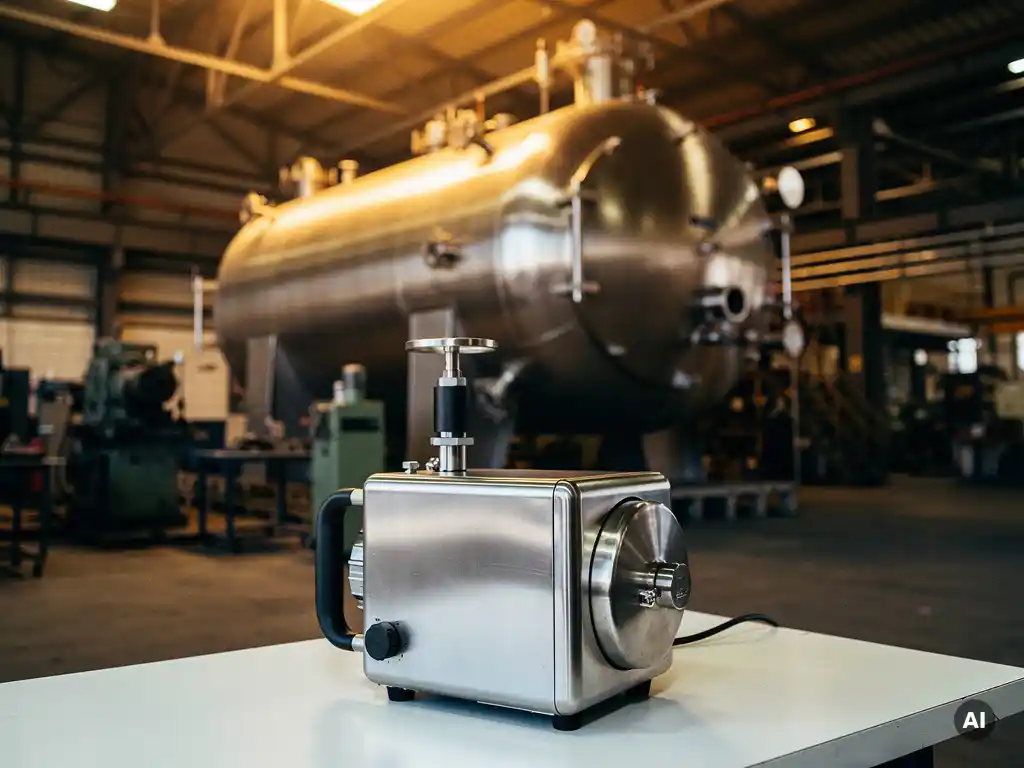
Laboratory autoclaves and industrial autoclaves are fundamentally different categories of pressure equipment, not simply different sizes of the same device. Laboratory autoclaves are compact, standardised units designed for controlled experimental or sterilisation tasks, while industrial autoclaves are purpose-built, large-scale pressure vessels engineered to handle continuous production processes under extreme conditions. The distinctions span scale, materials, regulatory obligations, and engineering complexity, and understanding them matters when specifying equipment for a demanding industrial process.
What makes industrial autoclaves fundamentally different from laboratory autoclaves?
The core difference between laboratory and industrial autoclaves lies in their purpose and engineering scope. Laboratory autoclaves are off-the-shelf units built to repeatable, predictable specifications for sterilisation or small-scale testing. Industrial autoclaves are custom-engineered pressure vessels designed around a specific production process, operating environment, and throughput requirement: no two are identical.
A laboratory autoclave is essentially a sealed chamber that applies steam or pressure to achieve a defined result, such as sterilising medical instruments or running a small batch reaction. Its design is standardised, its operating envelope is modest, and it is selected from a catalogue.
An industrial autoclave, by contrast, is a piece of critical process infrastructure. It must be designed from the ground up to match the chemical environment, thermal profile, pressure cycle, and production volume of a specific industrial application. The engineering decisions (wall thickness, material selection, nozzle configuration, lining system, and internal geometry) are all driven by process requirements that a laboratory unit was never built to accommodate.
What size and capacity ranges do industrial autoclaves reach?
Industrial autoclaves can reach dimensions and weights that are difficult to comprehend without context. Units used in mining and chemical processing regularly exceed 500 tons in weight, with diameters of several metres and lengths that require specialist transport logistics. At the upper end of the scale, single autoclaves can approach 1,000 tons.
By comparison, a laboratory autoclave typically fits on a bench or within a small room, with chamber volumes measured in litres rather than cubic metres.
The scale difference has direct engineering consequences. A large industrial autoclave must account for structural loads, thermal expansion, support saddle design, and transportation constraints from the earliest stages of design. Wall thickness alone can run to hundreds of millimetres in high-pressure applications. These are not engineering considerations that appear in laboratory equipment at any scale.
For reference, autoclaves fabricated for hydrometallurgical applications, such as nickel or gold extraction, routinely weigh between 500 and 960 tons. These units are not enlarged laboratory vessels; they are entirely different engineering artefacts, designed and manufactured using processes and facilities that have no equivalent in laboratory-scale production. You can explore industrial autoclave capabilities to understand the scope of what large-scale fabrication involves.
What materials are used in industrial autoclave construction?
Industrial autoclaves are built from materials selected specifically for the chemical and thermal environment they will operate in. The most demanding applications require corrosion-resistant alloys or clad constructions, where a structural carbon steel shell is lined with a corrosion-resistant inner layer.
Common material choices for industrial autoclaves include:
- Titanium (various grades): Used extensively in hydrometallurgical autoclaves, particularly for High Pressure Acid Leaching (HPAL) and Pressure Oxidation (POX) processes in nickel, cobalt, and gold applications. Ti Grade 17 is a well-established lining material in these environments.
- Hastelloy and Inconel: Selected for highly corrosive chemical environments where titanium is insufficient or unsuitable.
- Zirconium: Applied in processes involving aggressive acids where other materials degrade unacceptably.
- Carbon steel with clad lining: A cost-effective structural approach where the outer shell provides mechanical strength and the inner clad layer provides corrosion resistance.
- Stainless steel: Used in less aggressive environments where standard corrosion resistance is sufficient.
Laboratory autoclaves are typically manufactured from standard stainless steel grades, which are adequate for the modest chemical exposures and pressures involved in laboratory work. The exotic materials used in industrial autoclave construction are chosen because the consequences of material failure in a production environment (process contamination, structural breach, or unplanned shutdown) are severe and costly.
How do pressure and temperature ratings differ between the two types?
Industrial autoclaves operate at significantly higher pressures and temperatures than laboratory units, and they must sustain those conditions continuously across long production campaigns rather than in short, controlled cycles.
Laboratory autoclaves typically operate at pressures up to a few bar and temperatures in the range required for sterilisation or small-scale synthesis. These parameters are consistent and predictable, and the equipment is designed around a narrow, well-defined operating window.
Industrial autoclaves for hydrometallurgical processes, for example, operate at high pressures and elevated temperatures that place extreme mechanical and thermal demands on every component: shell, heads, nozzles, internal brickwork or lining, and agitation systems where fitted. The pressure vessel design must account not only for steady-state operating loads but also for pressure cycling, thermal shock, and the long-term effects of aggressive process chemistry on the vessel wall.
This is why wall thickness in industrial autoclaves can be substantially greater than in laboratory equipment, and why pressure vessel codes and third-party certification are mandatory rather than optional.
What regulatory standards and certifications apply to industrial autoclaves?
Industrial autoclaves are subject to formal pressure vessel regulations that require design verification, material traceability, welding qualification, non-destructive examination, and third-party inspection before the equipment can be put into service.
The applicable standards depend on the jurisdiction and the end-use location of the equipment. The most commonly referenced frameworks include:
- PED (Pressure Equipment Directive): The European Union’s mandatory framework for pressure equipment placed on the EU market, covering design, fabrication, and conformity assessment.
- ASME (American Society of Mechanical Engineers) Boiler and Pressure Vessel Code: The internationally recognised US standard, widely specified by EPC contractors and technology licensors for projects worldwide regardless of geography.
- ISO 9001: The quality management standard that underpins consistent fabrication processes and traceability throughout the manufacturing scope.
Laboratory autoclaves, by contrast, are generally not subject to the same level of third-party regulatory oversight. They may carry CE marking or manufacturer conformity declarations, but the formal inspection and certification regime that applies to industrial pressure equipment does not apply at laboratory scale.
For industrial projects, certification is not an administrative formality. It is a contractual and legal requirement that defines which fabricators are qualified to manufacture the equipment in the first place.
When should a project specify an industrial autoclave instead of scaling up a laboratory unit?
A project should specify a purpose-built industrial autoclave whenever the process moves beyond laboratory or pilot scale into production, and in practice, this threshold arrives much earlier than many project teams expect. Scaling up a laboratory autoclave is not a viable engineering path once production volumes, process chemistry, or operating conditions exceed what standardised equipment can safely handle.
The decision to specify an industrial autoclave is driven by a combination of technical and regulatory factors. If any of the following apply, a custom industrial autoclave is the appropriate specification:
- The process involves aggressive acids, high temperatures, or pressures that exceed standard laboratory equipment ratings
- Continuous or semi-continuous production throughput is required
- The operating environment demands corrosion-resistant alloys or clad construction
- The equipment must comply with PED, ASME, or equivalent pressure vessel codes
- The vessel diameter, length, or weight exceeds what catalogue equipment can provide
- Internal components such as agitators, baffles, or lining systems must be integrated into the design
In hydrometallurgical processing, for example, the jump from pilot testing to production-scale HPAL or POX involves autoclaves that bear no engineering resemblance to the laboratory units used during process development. The production vessel is a custom-engineered pressure system, designed around the specific ore chemistry, throughput, and site conditions of the project.
How Coek Engineering supports industrial autoclave projects
Coek Engineering designs and manufactures large-scale industrial autoclaves for technically demanding applications where standard equipment is not sufficient. With fabrication facilities capable of producing units up to 10 metres in diameter and approaching 1,000 tons in weight, Coek has the manufacturing infrastructure to handle the most demanding autoclave specifications.
Key capabilities relevant to industrial autoclave projects include:
- Custom design and fabrication of titanium-clad autoclaves for HPAL and POX applications in nickel, cobalt, and gold processing
- More than 30 years of experience with clad construction, combining structural carbon steel with corrosion-resistant inner layers
- In-house mechanical engineering to translate process requirements into manufacturable equipment
- Compliance with PED, ASME, and ISO 9001 standards
- Proven references at the upper end of the weight scale, with delivered units approaching 960 tons
If your project involves a large-scale autoclave with demanding materials, pressure ratings, or corrosion requirements, contact Coek Engineering to discuss your specification with our engineering team.
Frequently Asked Questions
How long does it typically take to design and fabricate a custom industrial autoclave?
Lead times for custom industrial autoclaves vary significantly depending on vessel size, material complexity, and the extent of internal components required, but large-scale units for hydrometallurgical applications commonly involve engineering and fabrication timelines of 18 to 36 months. The design phase alone — covering process integration, material selection, pressure vessel calculations, and regulatory documentation — can take several months before fabrication begins. Projects with aggressive chemistry, clad construction, or ASME/PED certification requirements should factor these timelines into their overall project schedule from the earliest planning stages.
What is the difference between clad construction and solid alloy construction, and how do I know which one my project needs?
Clad construction uses a structural carbon steel shell for mechanical strength with a bonded corrosion-resistant inner layer — such as titanium or zirconium — to handle the process chemistry, while solid alloy construction uses the corrosion-resistant material throughout the full wall thickness. Clad construction is typically the preferred and more cost-effective approach for large industrial autoclaves, since fabricating a 500-ton vessel entirely from titanium or Hastelloy would be prohibitively expensive and technically unnecessary. The choice between the two is determined by factors including operating pressure, temperature, the aggressiveness of the process chemistry, and long-term maintenance considerations — all of which should be evaluated during the front-end engineering phase.
Can an existing industrial autoclave be re-lined or upgraded, or does it need to be replaced entirely?
In many cases, industrial autoclaves can be re-lined or refurbished rather than fully replaced, which can significantly extend the operational life of a vessel and reduce capital expenditure. Re-lining is a viable option when the structural shell remains mechanically sound and the primary issue is corrosion or wear of the inner lining system. However, any refurbishment scope must be evaluated against the original design documentation and applicable pressure vessel codes, and re-certification may be required depending on the extent of the work and the jurisdiction in which the equipment operates.
What are the most common mistakes engineering teams make when specifying an industrial autoclave for the first time?
One of the most frequent mistakes is underestimating the process chemistry’s aggressiveness and selecting materials based on laboratory-scale exposure rather than continuous production conditions, which can lead to premature lining failure and costly unplanned shutdowns. Another common error is leaving the autoclave specification too late in the project development cycle, which compresses the engineering and fabrication timeline and increases the risk of misalignment between the vessel design and the broader plant layout. Teams also frequently overlook the logistical complexity of transporting very large vessels to site, which must be considered during the design phase to ensure dimensions and weight are compatible with available transport routes and lifting infrastructure.
How are industrial autoclaves transported and installed given their extreme size and weight?
Transporting industrial autoclaves weighing hundreds of tons requires specialist heavy-lift logistics, including route surveys, abnormal load permits, and in some cases purpose-built transport frames or barges for vessels that cannot travel by road. Fabricators with experience in large-scale autoclave production design vessel dimensions and lifting points with transport constraints in mind from the outset, since a vessel that cannot be moved to site is not a viable design regardless of its technical merits. Installation typically involves heavy-lift cranes and precise foundation engineering, with the vessel’s support saddles and anchor arrangements designed to accommodate both installation loads and the thermal expansion that occurs during operation.
What ongoing inspection and maintenance requirements apply to industrial autoclaves once they are in service?
Industrial autoclaves in service are subject to periodic in-service inspection requirements under the applicable pressure vessel regulations, which typically mandate scheduled internal and external examinations, non-destructive testing of welds and critical zones, and documented fitness-for-service assessments. The frequency and scope of these inspections are determined by the operating conditions, the regulatory framework of the country of operation, and the risk-based inspection programme developed for the specific installation. Lining integrity is a particular focus in hydrometallurgical autoclaves, where titanium or other corrosion-resistant layers are inspected for disbonding, erosion, or localised damage that could allow process chemistry to reach the structural shell.
Is it possible to pilot-test a process at laboratory scale and then directly scale up to a full industrial autoclave, or are intermediate steps necessary?
While laboratory-scale testing is essential for validating process chemistry and reaction kinetics, directly scaling from laboratory to full production scale without intermediate pilot or demonstration-scale testing carries significant technical and financial risk, particularly for complex hydrometallurgical processes. Pilot-scale testing at an intermediate vessel size allows engineers to identify scaling effects, refine residence times, and validate material performance under conditions that more closely approximate production, reducing uncertainty before committing to a full-scale capital investment. The data generated at pilot scale also feeds directly into the engineering basis for the industrial autoclave specification, improving the accuracy of the design and reducing the likelihood of costly modifications after commissioning.
Related Articles
- Why does inspection access matter when planning reactor internals?
- What materials are used in shell-and-tube heat exchanger manufacturing?
- How do you ensure material traceability during pressure vessel manufacturing?
- What safety systems are required for high-pressure industrial autoclaves?
- Who buys used autoclaves?