
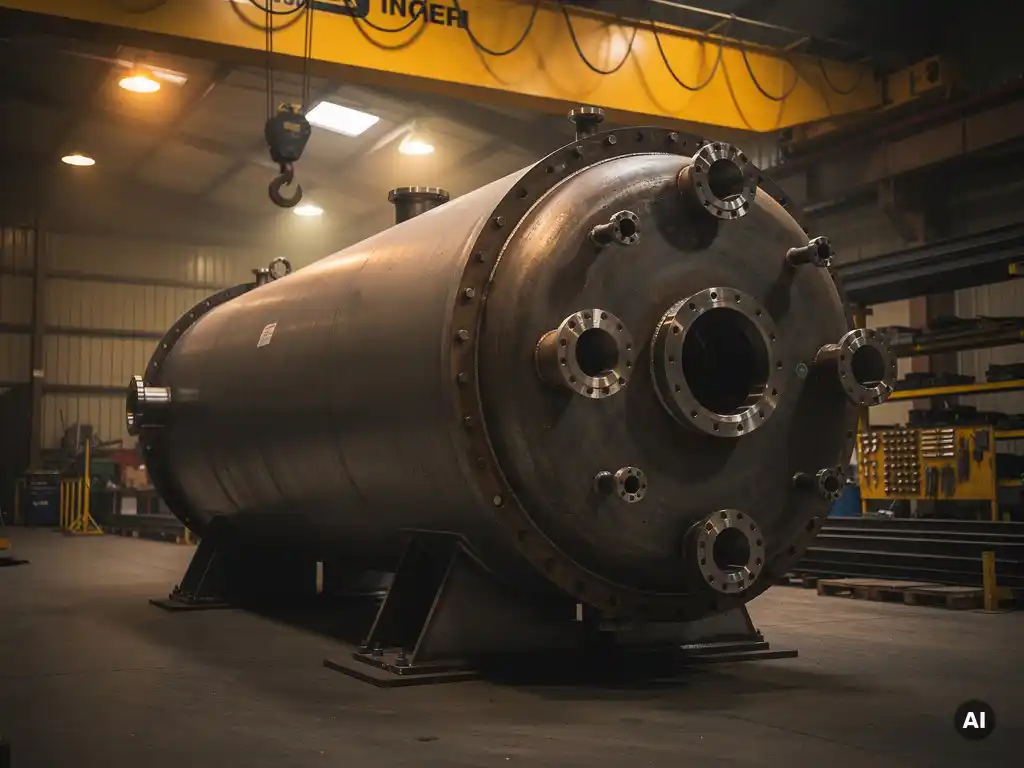
A large industrial autoclave typically costs between several hundred thousand euros and several million euros, depending on size, pressure rating, materials of construction, and the complexity of integrated systems. For the largest and most technically demanding autoclaves, total equipment costs can approach or exceed one million euros before installation and ancillary systems are accounted for. The sections below unpack the key pricing drivers, material choices, hidden costs, and the decision criteria that determine whether a higher-specification autoclave is the right investment.
What factors drive industrial autoclave pricing?
Industrial autoclave pricing is driven primarily by physical size, design pressure, wall thickness, material selection, and the scope of integrated systems. These variables interact: a larger vessel operating at higher pressure requires thicker walls, which in turn demands more raw material, longer fabrication time, and more demanding welding and inspection procedures. Each factor compounds the others.
The most significant pricing drivers include:
- Vessel dimensions: Diameter, length, and overall weight directly determine the volume of material required and the complexity of handling and fabrication logistics.
- Design pressure and temperature: Higher operating conditions demand heavier wall sections, more rigorous engineering calculations, and more stringent testing protocols.
- Material of construction: Carbon steel, stainless steel, nickel alloys, titanium, and clad constructions each carry significantly different cost profiles.
- Internal configuration: Heating or cooling systems, agitation, racks, tooling supports, and instrumentation all add engineering and fabrication scope.
- Applicable standards and certifications: Compliance with PED, ASME, or other international codes introduces specific design, documentation, and inspection requirements that affect cost.
- Delivery and transport logistics: Oversized equipment may require special transport, which adds to total project cost.
What is the typical price range for a large industrial autoclave?
For large industrial autoclaves used in demanding process applications, prices typically range from several hundred thousand euros to well over one million euros. The widest price variations occur at the extremes: relatively straightforward carbon steel autoclaves at moderate pressure sit at the lower end, while large-diameter, high-pressure, corrosion-resistant or heavily instrumented units command significantly higher prices.
It is important to note that published price ranges for industrial autoclaves are rarely reliable guides for budgeting specific projects. Autoclave cost is highly project-specific. A vessel that appears similar in external dimensions to a reference unit can carry a substantially different price if the operating pressure, wall thickness, or material specification differs. Buyers should treat any general range as a starting point for scoping conversations rather than a firm budget figure.
For context, industrial autoclaves at the upper end of the size spectrum, approaching 1,000 tons in weight, represent capital investments that require detailed engineering and commercial evaluation before any meaningful cost estimate can be produced.
How does material selection affect autoclave cost?
Material selection is one of the most consequential cost variables in autoclave manufacturing. The choice of construction material affects raw material cost, weldability, fabrication time, and the qualification requirements for welders and procedures. Moving from carbon steel to stainless steel, and further to nickel alloys or reactive metals, can multiply material costs by a factor of several.
Common material choices and their cost implications:
- Carbon steel: The most cost-effective base material, suitable where corrosion is not a primary concern or where linings provide protection.
- Stainless steel: Offers improved corrosion resistance at moderate additional cost, widely used across process industries.
- Clad construction: A carbon steel shell with a corrosion-resistant inner layer (such as stainless steel, Inconel, or titanium) delivers corrosion protection at a lower total cost than solid exotic alloys. This approach is particularly relevant for large vessels where solid exotic material would be prohibitively expensive.
- Hastelloy and Inconel: High-performance nickel alloys for severely corrosive or high-temperature environments. Raw material costs are substantially higher, and fabrication requires specialist welding expertise.
- Titanium and zirconium: Reactive metals used where extreme corrosion resistance is required. These materials demand highly controlled fabrication environments and specialist procedures, which are reflected in the final price.
Clad construction deserves particular attention as a cost-engineering strategy. For large autoclaves where full exotic alloy construction would be impractical, a well-engineered clad vessel can deliver the required corrosion performance at a fraction of the solid alloy cost.
What’s the difference between a standard and a custom-built autoclave in terms of cost?
Standard autoclaves are manufactured to fixed specifications, often in series, and benefit from repeated production sequences and pre-engineered designs. Custom-built autoclaves are engineered from a specific process brief, meaning every design decision, material selection, and fabrication step is determined by the project’s unique requirements. This difference in engineering scope is the primary reason custom autoclaves carry higher price tags.
For demanding industrial applications, standard autoclaves are rarely adequate. Process conditions, dimensional requirements, internal configurations, and regulatory obligations typically combine to make a fully custom solution necessary. The additional engineering investment in a custom autoclave is offset by the assurance that the equipment is precisely matched to the process, reducing the risk of underperformance, premature failure, or costly modifications after commissioning.
Custom fabrication also allows the buyer to optimize the design for total lifecycle cost rather than purchase price alone. A vessel engineered with the right wall thickness, the right material, and the right internal configuration from the outset will typically outperform and outlast a compromise solution selected on initial price.
What hidden costs should buyers account for beyond the vessel price?
The vessel purchase price is only part of the total cost of acquiring and operating a large industrial autoclave. Buyers who focus exclusively on the equipment price risk significant budget overruns when ancillary costs emerge during project execution.
Key costs to account for beyond the vessel price include:
- Engineering and design: Detailed mechanical engineering, finite element analysis for complex geometries, and documentation for regulatory approval all carry cost that may or may not be included in the vessel price.
- Pressure testing and inspection: Hydrostatic testing, non-destructive examination, third-party inspection, and code compliance documentation are standard requirements that add to project cost.
- Internal systems: Heating coils, cooling circuits, agitation systems, seals, and instrumentation are frequently scoped and priced separately from the vessel shell.
- Transport and rigging: Oversized and overweight equipment requires specialist transport, escort vehicles, route surveys, and heavy-lift rigging at the installation site.
- Installation and commissioning: Civil foundations, connecting pipework, utilities, and commissioning support are project costs that must be budgeted alongside the equipment itself.
- Spare parts and long-term maintenance: Seals, closure mechanisms, instrumentation, and wear components require lifecycle budgeting, particularly for equipment in continuous or high-cycle service.
When does it make sense to invest in a higher-specification autoclave?
Investing in a higher-specification autoclave makes sense when the cost of equipment failure, unplanned downtime, or premature replacement exceeds the additional upfront cost of a more capable vessel. In technically demanding applications, the margin between adequate and insufficient specification is rarely large, and the consequences of getting it wrong are disproportionate to any initial saving.
Higher specification is justified when:
- Operating conditions are at the limits of standard equipment capability, leaving no margin for process variation.
- The process environment is corrosive, requiring materials or cladding that resist degradation over the intended service life.
- Regulatory or safety requirements demand a higher level of design, inspection, and documentation.
- The autoclave is central to a production process where downtime carries significant commercial consequences.
- The equipment will operate for a long service life, making lifecycle cost a more relevant metric than purchase price.
In these situations, the pressure vessel cost should be evaluated against the total value at risk, not against the price of a lower-specification alternative. A well-engineered, properly specified autoclave delivers value through reliability, longevity, and process consistency that a cost-led selection cannot match.
How Coek helps with industrial autoclave specification and pricing
Coek Engineering manufactures custom industrial autoclaves for technically demanding applications, including large-scale, high-pressure, and corrosion-resistant designs. For buyers navigating autoclave cost and specification decisions, Coek offers:
- In-house mechanical engineering to translate process requirements into manufacturable equipment designs
- Advanced materials expertise, including clad construction, titanium, zirconium, Hastelloy, and Inconel
- Large-scale manufacturing capabilities for autoclaves up to approximately 1,000 tons
- Compliance with international standards, including PED and ASME
- Integrated equipment scope where required, combining the vessel with internal systems and ancillary components
If you are scoping a large or technically complex autoclave project and need a manufacturer capable of handling the full specification, contact Coek Engineering to discuss your requirements directly with our engineering team.
Frequently Asked Questions
How long does it typically take to manufacture a large custom industrial autoclave?
Lead times for large custom industrial autoclaves generally range from 12 to 24 months, depending on vessel complexity, material availability, and the manufacturer’s current production schedule. Exotic materials such as titanium, zirconium, or Hastelloy can extend timelines due to raw material procurement and the additional qualification requirements for specialist welding procedures. Buyers should factor lead time into project planning early, as late engagement with a manufacturer is one of the most common causes of schedule overruns on capital equipment projects.
What information do I need to provide to get an accurate autoclave cost estimate?
To produce a meaningful cost estimate, a manufacturer will typically need your required vessel dimensions (internal diameter and length), design pressure and temperature, process media and corrosion requirements, applicable standards (such as PED or ASME), and any specific internal configuration needs such as heating, cooling, or agitation systems. The more complete your process brief, the more accurate and reliable the estimate will be. Providing incomplete or assumed data at the scoping stage is the primary reason early-stage budget figures later prove inaccurate.
Is it possible to upgrade or re-rate an existing autoclave rather than purchasing a new one?
In some cases, existing autoclaves can be re-rated to higher pressures or temperatures following a formal engineering re-assessment, provided the original wall thickness and material specification support the revised conditions. However, re-rating requires full engineering review, updated documentation, and potentially additional inspection or testing to satisfy the relevant pressure equipment code. For vessels where process conditions have changed significantly, or where corrosion or fatigue has reduced remaining life, a new purpose-built autoclave is often the more cost-effective and lower-risk solution over the long term.
What are the most common mistakes buyers make when specifying an industrial autoclave?
The most frequent mistakes include underspecifying design pressure or temperature to reduce upfront cost, selecting a material of construction based on purchase price rather than the actual corrosion environment, and failing to account for ancillary costs such as transport, installation, and internal systems in the project budget. Another common error is engaging a manufacturer too late in the project timeline, leaving insufficient room for engineering, fabrication, and testing within the required schedule. Involving an experienced manufacturer at the earliest possible stage of project development helps avoid all of these pitfalls.
How do international standards like PED and ASME affect autoclave cost and procurement?
Compliance with standards such as the European Pressure Equipment Directive (PED) or the ASME Boiler and Pressure Vessel Code introduces specific design, material traceability, welding qualification, inspection, and documentation requirements that add to the overall cost of the vessel. The applicable standard is typically determined by the country of installation and the hazard category of the equipment, and cannot be negotiated away. Buyers sourcing autoclaves internationally should confirm early which standard applies at the installation site, as switching standards mid-project can result in significant rework and cost.
What should I look for when evaluating industrial autoclave manufacturers?
Key criteria include the manufacturer’s experience with vessels of comparable size, pressure rating, and material specification to your project, as well as their in-house engineering capabilities and fabrication infrastructure. Certifications and approved manufacturer status under relevant codes (such as PED Notified Body approval or ASME U-stamp) are baseline requirements for regulated applications. References from comparable projects, transparency in engineering documentation, and the ability to handle integrated scope — vessel plus internal systems — are strong indicators of a manufacturer capable of delivering a complex autoclave project reliably.
Can clad construction be used for autoclaves operating at very high pressures?
Yes, clad construction is technically viable across a wide range of operating pressures, provided the engineering is carried out correctly. The structural integrity of a clad vessel is provided by the carbon steel base material, which is sized to meet the full design pressure requirements, while the cladding layer handles the corrosion function. Bond integrity between the base material and cladding must be verified through appropriate inspection methods, and the design must account for differential thermal expansion between the two materials. When properly engineered, clad autoclaves offer a highly cost-effective solution for high-pressure, corrosive service without the cost penalty of full exotic alloy construction.
Related Articles
- What materials are used in shell-and-tube heat exchanger manufacturing?
- How long does it take to manufacture a custom industrial pressure vessel?
- How do heating and cooling systems affect industrial autoclave design?
- How does shell-and-tube heat exchanger design differ from reactor vessel design?
- What non-destructive testing methods apply to thick-walled pressure equipment?