
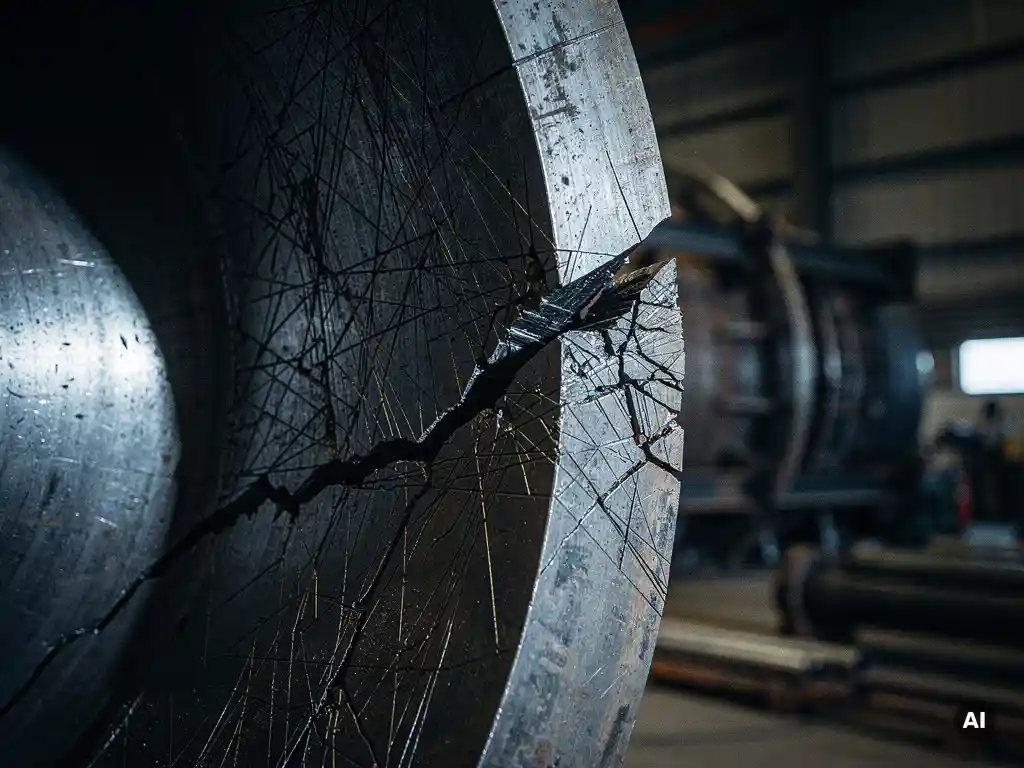
Hydrogen embrittlement is a serious and well-documented risk in high-pressure reactor vessels, capable of causing sudden, brittle fracture with little or no prior warning. It occurs when atomic hydrogen diffuses into a metal’s microstructure, reducing its ductility and fracture toughness. The risk is highest in thick-walled, high-strength steel vessels operating under elevated pressure and temperature. The sections below address the most critical questions engineers and procurement teams face when evaluating hydrogen damage risk in reactor equipment.
How does hydrogen embrittlement damage reactor vessel walls?
Hydrogen embrittlement damages reactor vessel walls by allowing atomic hydrogen to penetrate the metal lattice, where it accumulates at grain boundaries, voids, and microstructural defects. This internal hydrogen pressure reduces the metal’s ability to deform plastically under stress, making it vulnerable to cracking at stress levels well below its rated yield strength.
In high-pressure reactor environments, hydrogen is often present in large quantities, either as a process gas or as a by-product of corrosion reactions. Atomic hydrogen, far smaller than its molecular form, passes through the steel matrix with relative ease. Once trapped at internal defects, it can cause two distinct damage mechanisms: hydrogen-induced cracking (HIC), which progresses at lower temperatures through internal pressure buildup, and high-temperature hydrogen attack (HTHA), where hydrogen reacts with carbides in the steel to form methane, creating internal voids and permanently weakening the material.
Both mechanisms are insidious because they develop internally and may not be visible on the vessel’s outer surface until damage is advanced.
Which materials are most vulnerable to hydrogen embrittlement?
High-strength carbon steels and low-alloy steels are the materials most vulnerable to hydrogen embrittlement in reactor vessel applications. The higher the tensile strength of the steel, the more susceptible it generally becomes. Hardened zones, particularly heat-affected zones near welds, are especially at risk because of their microstructural characteristics.
The susceptibility of common pressure vessel materials can be broadly ranked:
- High-strength carbon and low-alloy steels – most susceptible, particularly at higher hardness levels
- Martensitic and ferritic stainless steels – moderately susceptible depending on heat treatment
- Austenitic stainless steels – generally more resistant due to their face-centred cubic structure, but not immune under severe conditions
- Nickel alloys such as Inconel and Hastelloy – significantly more resistant and often selected precisely to mitigate hydrogen damage risk
- Titanium and zirconium – can absorb hydrogen and form hydrides under specific conditions, requiring careful material and process control
Clad construction, where a carbon steel shell is lined with a corrosion-resistant alloy, is one approach used in demanding reactor applications to combine structural strength with improved resistance to the process environment.
What operating conditions increase hydrogen embrittlement risk?
The risk of hydrogen embrittlement in reactor vessels increases significantly under elevated hydrogen partial pressure, high operating temperatures, and conditions that promote hydrogen generation at the metal surface. These three factors often coincide in hydroprocessing, chemical synthesis, and other high-pressure reactor applications.
Specific conditions that elevate risk include high hydrogen partial pressures above roughly 7 bar, operating temperatures in the range where HTHA becomes active (typically above 200 degrees Celsius for susceptible steels), the presence of hydrogen sulphide, which accelerates hydrogen uptake into the metal, cathodic protection or galvanic conditions that drive hydrogen into the surface, and weld residual stresses combined with high hardness in heat-affected zones.
The Nelson Curves, published by the American Petroleum Institute, are widely used in industry to define safe operating limits for carbon and low-alloy steels under hydrogen service. Equipment operating near or at the boundaries of these curves requires particularly careful material selection and inspection planning.
How is hydrogen embrittlement detected in pressure vessels?
Hydrogen embrittlement and hydrogen damage in pressure vessels are detected through a combination of non-destructive examination techniques, because surface inspection alone is insufficient. The damage is internal, and cracks may not propagate to the outer surface until the vessel is in an advanced state of degradation.
Commonly used detection methods include:
- Ultrasonic testing (UT) – including advanced phased array UT, which can identify internal cracking, blistering, and wall thickness loss
- Acoustic emission testing – capable of detecting active crack growth during pressurisation
- Radiographic testing – useful for identifying hydrogen blisters and larger internal voids
- Magnetic particle inspection and dye penetrant testing – for surface-breaking cracks, particularly at welds
- Hydrogen flux monitoring – measuring hydrogen permeation through the vessel wall to assess real-time uptake during operation
Inspection frequency and method selection should be based on the severity of hydrogen service, the material’s known susceptibility, and the operating history of the vessel. A risk-based inspection approach, aligned with standards such as API 581, is increasingly common in critical reactor applications.
Can hydrogen embrittlement be prevented during fabrication?
Yes, hydrogen embrittlement risk can be substantially reduced through deliberate decisions made during the design and fabrication stages of a reactor vessel. Prevention is far more cost-effective than in-service remediation, and fabrication quality has a direct and lasting impact on a vessel’s resistance to hydrogen damage throughout its operational life.
Key preventive measures during fabrication include selecting materials with appropriate hydrogen service ratings, controlling weld heat input and interpass temperatures to limit hardness in heat-affected zones, applying post-weld heat treatment to relieve residual stresses, using low-hydrogen welding consumables and strict hydrogen control procedures during welding, and specifying corrosion-resistant cladding or lining where the process environment promotes hydrogen generation at the surface.
Dimensional accuracy and weld quality are also relevant. Stress concentrations caused by poor fit-up or geometric irregularities can become preferential sites for hydrogen-assisted cracking under operating conditions. For custom pressure vessels in hydrogen service, the fabrication specification should explicitly address each of these factors.
What are the consequences of undetected hydrogen embrittlement in reactors?
Undetected hydrogen embrittlement in a reactor vessel can lead to catastrophic brittle fracture, which occurs with minimal plastic deformation and therefore without the visible warning signs that typically precede ductile failure. The consequences range from unplanned shutdowns and costly repair campaigns to complete vessel failure with serious safety implications.
Unlike corrosion-driven wall thinning, which tends to progress gradually and can often be tracked through routine inspection, hydrogen-assisted cracking can accelerate rapidly once a critical crack size is reached. This makes the absence of visible damage a poor indicator of structural integrity in hydrogen service.
The economic consequences of a reactor vessel failure extend well beyond the equipment itself. Production losses, emergency inspection and repair costs, regulatory involvement, and potential liability all compound the direct cost of the failure event. In critical process applications, vessel integrity is therefore a risk management issue as much as a technical one.
When should a high-pressure reactor vessel be taken out of service for hydrogen damage?
A high-pressure reactor vessel should be taken out of service when inspection findings exceed the acceptance criteria defined in the applicable fitness-for-service standard, or when operating conditions have moved outside the safe limits established for the material in hydrogen service. Continued operation beyond these thresholds significantly increases the probability of sudden and uncontrolled failure.
Fitness-for-service assessments, conducted in accordance with standards such as API 579 or BS 7910, provide a structured methodology for evaluating whether a vessel with known damage can continue to operate safely, under what conditions, and for how long. These assessments take into account crack size, material toughness, operating stress, and hydrogen environment severity.
Triggers for immediate removal from service include detection of through-wall cracking or leakage, identification of HTHA damage confirmed by microstructural examination, inspection findings that cannot be reliably sized or characterised, and any evidence that operating conditions have exceeded the Nelson Curve limits for the vessel’s material. Where findings are borderline, a conservative approach is warranted given the brittle nature of hydrogen-assisted failure.
How Coek supports reactor vessel integrity in hydrogen service
Coek Engineering designs and manufactures custom reactor vessels and high-pressure equipment for technically demanding applications, including those involving hydrogen service, corrosive environments, and advanced material requirements. Our approach to hydrogen embrittlement risk starts at the engineering and material selection stage, not after fabrication is complete.
- Material selection aligned with hydrogen service conditions, including advanced alloys and clad construction
- Controlled welding procedures with low-hydrogen consumables and post-weld heat treatment
- Fabrication to demanding international standards, including PED and ASME
- In-house mechanical engineering to translate process requirements into manufacturable, compliant equipment
- Experience with thick-walled, large-scale and first-of-a-kind reactor vessels where fabrication quality is critical
If your project involves a reactor vessel in hydrogen or corrosive service and you need a fabrication partner with the technical depth to address these risks from the outset, get in touch with our team to discuss your requirements.
Frequently Asked Questions
How do I know if my existing reactor vessel was fabricated with adequate hydrogen service controls?
Start by reviewing the original fabrication documentation, including material certifications, welding procedure specifications, post-weld heat treatment records, and the NDE reports from initial construction. If this documentation is incomplete or unavailable, a baseline inspection campaign using phased array ultrasonic testing combined with a fitness-for-service assessment can help establish the current condition of the vessel and identify any pre-existing vulnerabilities. For vessels already in hydrogen service, this kind of retrospective review is strongly advisable before the next scheduled turnaround.
What is the difference between hydrogen embrittlement and high-temperature hydrogen attack, and does it affect how I manage the risk?
Hydrogen embrittlement (HE) refers to the loss of ductility and fracture toughness caused by atomic hydrogen diffusing into the metal lattice, and it can occur across a wide temperature range including ambient conditions. High-temperature hydrogen attack (HTHA) is a distinct and irreversible mechanism that occurs at elevated temperatures, where hydrogen reacts with carbides in the steel to form methane, creating internal voids and permanently degrading the material’s strength. The distinction matters operationally because HTHA damage cannot be reversed by baking out or stress relief, meaning a vessel confirmed to have suffered HTHA may require replacement rather than repair. Each mechanism also calls for different inspection techniques and material selection criteria.
Can a reactor vessel be repaired after hydrogen damage has been detected, or does it always need to be replaced?
Whether repair or replacement is appropriate depends on the type, extent, and location of the damage identified. Hydrogen-induced cracking in localised areas, particularly at welds, may be addressable through controlled weld repair procedures, provided the surrounding material is sound and a fitness-for-service assessment confirms the repair will restore adequate structural integrity. HTHA damage, however, is microstructural and irreversible — vessels with confirmed HTHA are typically retired rather than repaired. Any repair decision should be made in conjunction with a qualified inspection engineer and evaluated against the applicable fitness-for-service standard, such as API 579 or BS 7910.
How often should a reactor vessel in hydrogen service be inspected?
Inspection frequency should be determined through a risk-based inspection (RBI) programme aligned with standards such as API 581, rather than relying solely on fixed calendar intervals. Key inputs to this assessment include the hydrogen partial pressure and temperature the vessel operates at relative to the Nelson Curve limits for its material, its operating history, previous inspection findings, and the consequences of failure for your process and facility. Vessels operating close to the boundaries of safe service conditions, or those with a history of hydrogen-related findings, typically warrant shorter inspection intervals and more comprehensive NDE scope than lower-risk equipment.
Does using austenitic stainless steel cladding fully protect the base material from hydrogen damage?
Cladding with an austenitic stainless steel or nickel alloy provides meaningful protection by acting as a barrier between the process environment and the carbon or low-alloy steel shell, reducing the rate of hydrogen uptake at the inner surface. However, it does not eliminate the risk entirely. If the cladding develops disbondment, cracks, or pinhole defects — which can occur over time due to thermal cycling or fabrication issues — hydrogen can reach the base material directly. Regular inspection of the cladding bond integrity, using methods such as phased array UT or bond testing, is therefore an important part of maintaining the protection it provides.
What common mistakes do engineers make when specifying reactor vessels for hydrogen service?
One of the most frequent mistakes is specifying material grades primarily on the basis of mechanical strength or cost without fully accounting for hydrogen service compatibility, particularly the hardness limits in weld heat-affected zones. Another common oversight is failing to specify post-weld heat treatment explicitly in the fabrication standard, leaving it to the manufacturer’s discretion. Underestimating the role of hydrogen sulphide as an accelerant of hydrogen uptake is also a recurring issue — H₂S dramatically increases the rate at which atomic hydrogen enters the steel, and this needs to be reflected in both material selection and inspection planning from the outset of the project.
Are there industry standards or codes that specifically govern reactor vessel design for hydrogen service?
Yes, several widely recognised standards address hydrogen service directly. API RP 941 (the Nelson Curves) defines safe operating limits for steels under hydrogen partial pressure and temperature, and is the primary reference for HTHA risk. ASME Section VIII and Section II govern pressure vessel design and material requirements broadly, with specific guidance applicable to hydrogen environments. API 579 and BS 7910 provide fitness-for-service methodologies for assessing vessels with detected damage. For new equipment, NACE MR0103 and MR0175 address materials requirements in sour (H₂S-containing) hydrogen service. Aligning your fabrication specification and inspection programme with these standards from the design stage is the most reliable way to manage regulatory compliance and long-term integrity.
Related Articles
- What safety systems are required for high-pressure industrial autoclaves?
- How does pressure cycling affect the design life of industrial pressure vessels?
- What are the sizes of autoclaves available?
- What international standards apply to pressure vessel design and certification?
- What are the weight and dimensional limits for road transport of pressure vessels?